Our verdict
Is Sacred Elephant Emei worth it?
Yes. After a day on Mount Emei or at the Leshan Giant Buddha, Sacred Elephant Emei puts the region's crafts on one stage in an evening: Sichuan opera face-changing, Emei martial arts and a long-silk puppet dance, among twelve heritage techniques the listing names. It runs in seven chapters for about two hours, two shows went on sale each evening we checked, and calling it off a full day ahead is free.
Why the evening earns its place
It is named for the mountain's own story
Mount Emei is the place of enlightenment of Puxian, the bodhisattva known in Sanskrit as Samantabhadra, and East Asian art shows him riding a white elephant with six tusks. The show's title borrows that elephant.
Sichuan's stage crafts in one sitting
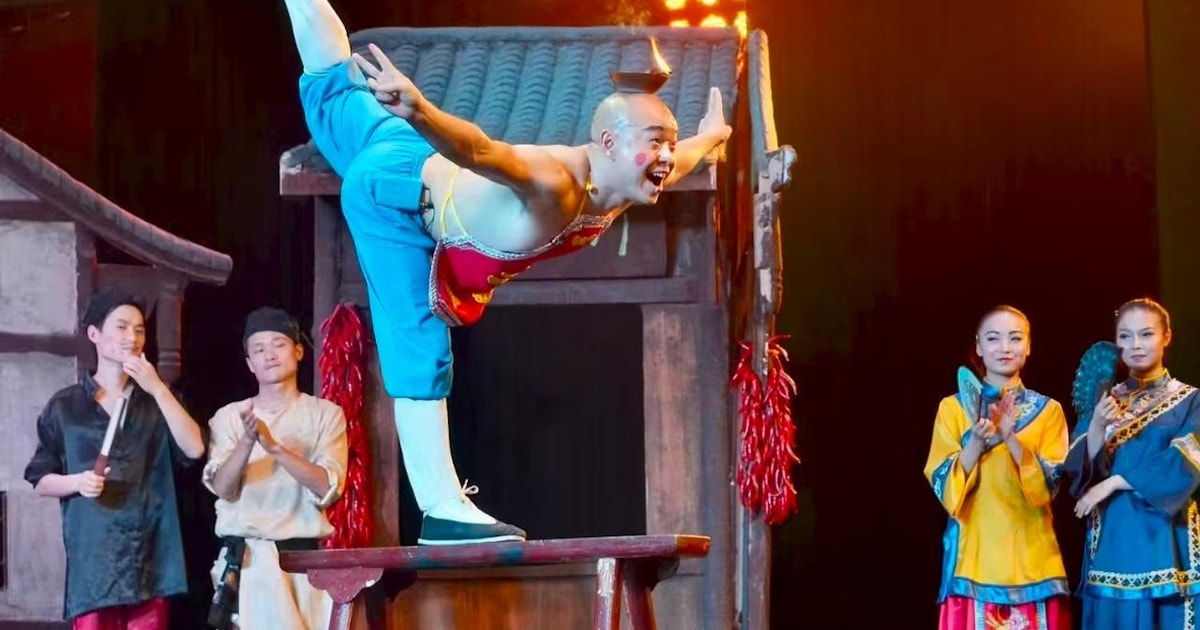
Bian lian, the face-changing of Sichuan opera, switches painted masks almost instantly. Add Emei's own martial arts and a puppet tradition the listing says has toured more than fifty countries.
It fills the evening, not the day
The starting times we saw were both in the evening, so the mountain or the Buddha keeps the daylight and the show takes the night.
Low risk to reserve
A seat can sit on hold with nothing paid today, and releasing it at least a day before returns the full amount.
Reserve
The show ticket first, then the mountain and the Buddha
The show ticket leads. After it come a Mount Emei entry ticket, two ways into the Leshan Giant Buddha scenic area and two coach days out of Chengdu that cover the mountain and the Buddha together.
Choose your Sacred Elephant Emei night
Pick a date and a party size to see the evening starting times. The two dates we opened on 27 November 2026 each offered two.
-
Sacred Elephant Emei show ticket
A seat for the seven-chapter evening show of face-changing, Emei martial arts and long-silk puppets, about two hours.
Open dates ↗ -
Mount Emei entry
Scenic-area admission with round-trip bus tickets on the mountain and digital tips for planning your own way to the Golden Summit.
Open dates ↗ -
Leshan Giant Buddha entry
Entry to the Giant Buddha scenic area and Lingyun Temple, linked to your passport; the cliff stairs to the feet need moderate fitness.
Open dates ↗ -
Giant Buddha with a river cruise
Admission for climbing the Buddha's hill, with an optional Three-Rivers boat of about 30 minutes to see the statue from the water.
Open dates ↗ -
Emei and the Buddha in a day
A group day out of Chengdu: a boat past the Giant Buddha, lunch, then Mount Emei's summit area, back in Chengdu at night.
Open dates ↗ -
English small-group day
Both World Heritage sights with a full-time English-speaking guide and no shopping stops, or a private Giant Buddha day instead.
Open dates ↗
More to book in Leshan and around Mount Emei
On the stage
What climbs onto the stage
The listing names the show's seven chapters and the crafts that fill them, without saying which act sits in which chapter. Here is what it promises, step by step, with the background each craft carries.
- The frame
Seven chapters
Illusion, Elegance, Spirit, Shu, Strength, Dream and Zen. Shu was the ancient kingdom behind the Ba-Shu culture of Sichuan and Chongqing, which the listing says the show carries on.
- The craft
Face-changing
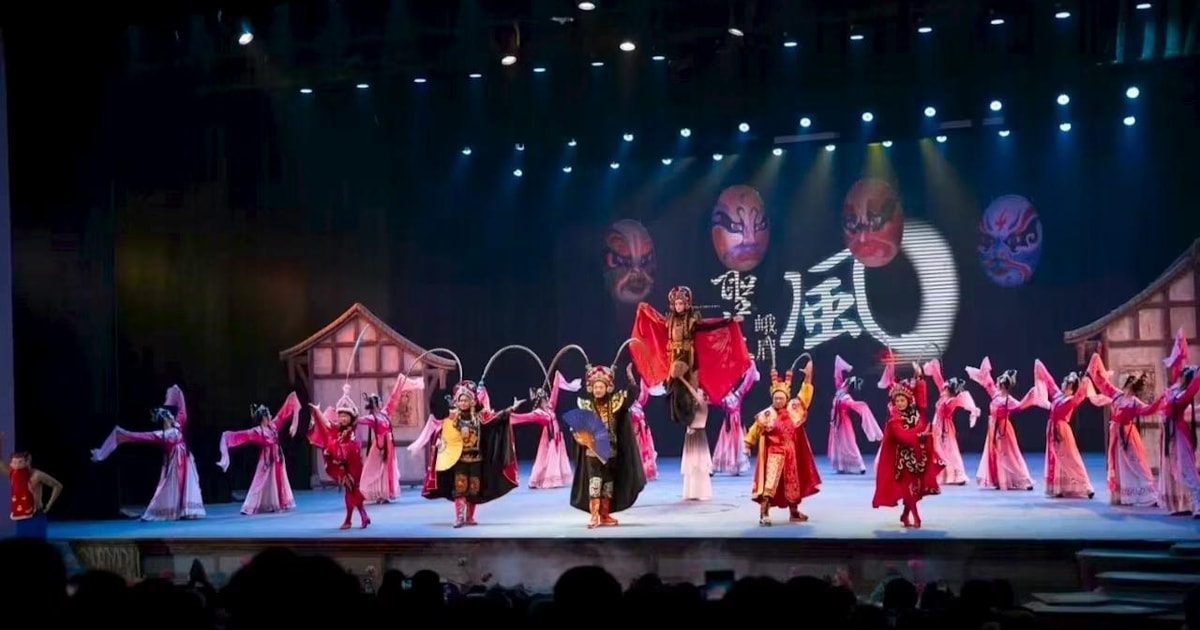
Bian lian, a part of Sichuan opera in which performers in brightly coloured masks change from one face to another almost instantly. Families long kept the method a secret.
- The mountain
Emei martial arts
Emeiquan is a family of fighting styles from Mount Emei, known for swift, flexible movement, and Wikipedia ties some of them to the wildlife of the range.
- The silk
Long-silk puppet dance
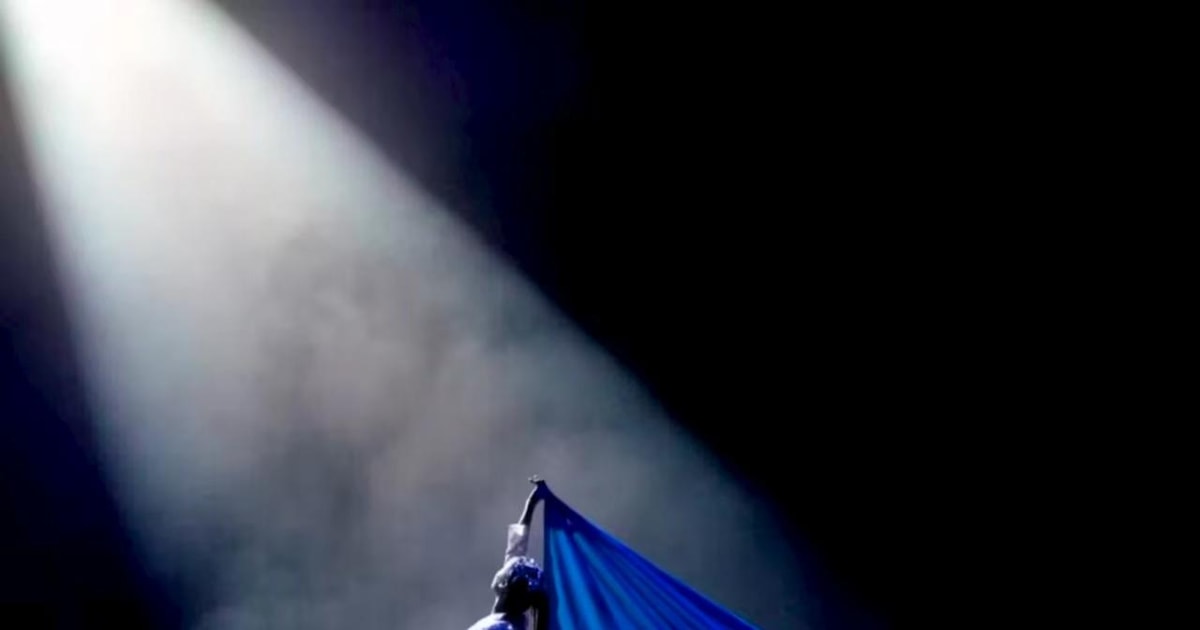
The listing counts a long silk puppet dance among the twelve techniques, and the booking page's photographs include a performer sweeping a long length of blue silk through a spotlight.
- The puppets
Northern Sichuan puppets
The listing calls the Northern Sichuan Puppet Show a heritage classic that has toured more than fifty countries and won awards.
- The count
Twelve heritage techniques
Twelve intangible cultural heritage techniques in all, the listing says, which it describes as making the show a living fossil of Sichuan's heritage.
- The summit
The white elephant
Puxian, whose mountain this is, rides a six-tusked white elephant in Buddhist art. The show's name, and its final word, Zen, point back up the mountain.
Everything here comes from the listing and the encyclopaedia pages each guide below lists. What happens in each chapter is left for the night itself.
See Sacred Elephant Emei dates ↗Gold sleeves, painted faces and a lotus stage
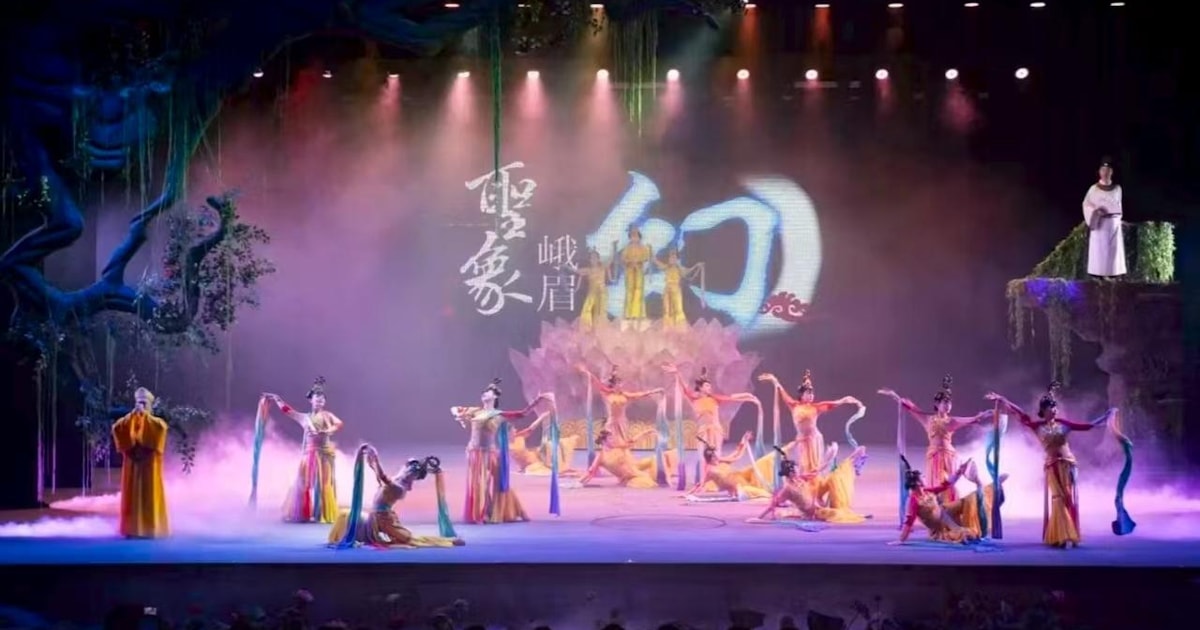
Three more photographs from the booking page.
Planning the day
Mount Emei and the show, or the Leshan Buddha and the show?
UNESCO lists the mountain and the Giant Buddha together, and the show is staged in Emeishan city in the evening. Here is how a day at each sight sits with the show, using only what the listings say.
A Mount Emei day
- Ticket to add
- Mount Emei entry, with round-trip bus tickets on the mountain
- What you see
- Puxian's mountain: temples, forest and the Golden Summit
- Link to the show
- The white elephant of the title is Puxian's mount
- Effort
- A big mountain; the ticket's tips cover the shuttle and cable car or hiking
- Evening
- The show is in Emeishan city, below the mountain
- Booking terms
- Free cancellation a day ahead on both tickets
A Giant Buddha day
- Ticket to add
- Giant Buddha scenic-area entry, or entry with an optional river cruise
- What you see
- A 71-metre stone Buddha carved where three rivers meet
- Link to the show
- Part of the same UNESCO listing as Mount Emei
- Effort
- Steep, narrow cliff stairs down to the feet; moderate fitness
- Evening
- Plan your way back to Emeishan city for the show
- Booking terms
- Free cancellation a day ahead on both tickets
Straight from the listing
What your show ticket covers
Taken down from the GetYourGuide page for the show on 27 November 2026; if the page has moved on since, believe the page.
- The ticket
- One seat at Sacred Elephant Emei, sold as Sacred Elephant Emei Show Ticket.
- On stage
- Twelve intangible cultural heritage techniques, among them Sichuan opera face-changing, Emei martial arts and the long silk puppet dance.
- Not covered
- Getting to the venue, and food and drinks.
- Length
- About two hours.
- Starting times
- Two in the evening on 1 and 5 December 2026. Bookable dates ran from 28 November right through December.
- Host
- A host or greeter who speaks Chinese.
- Access
- Marked wheelchair accessible.
- Venue
- Given as a map pin in Emeishan city instead of a street address; you will find it on the booking page.
- Honours
- The listing says the show has won awards including the Golden Panda and has appeared on local television and CCTV several times.
- Seller
- Sichuan China Travel Service Co., Ltd. is the activity provider shown on the page.
- Changing your mind
- No charge to cancel until 24 hours before, and the bill can wait if you reserve now.
The lowest adult starting price we saw on 27 November 2026. Checkout shows your own total before you pay a thing.
Four steps to your seat
From the calendar to the curtain
Pick the night
Choose a date on the calendar and its evening starting times appear alongside. Holding the seat costs nothing today.
Shape the day around it
Give the daylight to the mountain or the Giant Buddha, and keep your evening for the show.
Save the venue pin
The listing marks the venue with a map pin in Emeishan city. Save it before the day, as getting there is up to you.
Settle in for seven chapters
Eat before you go, since food and drinks are not part of the ticket, then watch Illusion through to Zen.
Guides
Six guides to the show, the mountain and its legends
- The verdict, with sources Is Sacred Elephant Emei worth it? A sacred mountain's legends, face-changing and kung fu in one evening What the Emeishan show is, the seven chapters, the crafts on stage, the elephant in its name, what the ticket covers, when it plays and who will enjoy it most. Read it →
- Choosing your day Mount Emei or the Leshan Giant Buddha: which day to pair with Sacred Elephant Emei Two World Heritage sights on one UNESCO listing, and one evening show. What each day involves, the tickets on this page, how much effort each needs and how the evening fits. Read it →
- The legend Puxian and the white elephant: the bodhisattva behind the show's name Who Samantabhadra is, why Mount Emei is his mountain, what the six-tusked elephant means and where you will see him on a visit. Read it →
- The crafts Face-changing, Emei martial arts and silk puppets: the crafts in Sacred Elephant Emei The three techniques the listing names: what each one is, its roots and what to look out for once the lights go down. Read it →
- Before you go Before Sacred Elephant Emei: tickets, sessions, language and access The practical points from the listing: what you book, when it plays, the venue pin, the language, wheelchair access, food and the cancellation window. Read it →
- Planning the day An Emeishan day that ends at the show: temples, summit and an evening seat How to shape a day on Mount Emei so you still have the energy, and the time, for Sacred Elephant Emei in the evening. Read it →
Questions before your Emei evening
Is Sacred Elephant Emei worth it?
Yes. In one evening it gathers the crafts Sichuan is known for, from opera face-changing to Emei martial arts and long-silk puppets, around Mount Emei's legends. It suits anyone spending a night in Emeishan after the mountain or the Giant Buddha, and a held seat can be released free until 24 hours before.
Which ticket should I book?
Book the first card, Sacred Elephant Emei Show Ticket. It is one seat at the show and has a single option. The other cards are separate products for the daytime: Mount Emei entry, two ways into the Giant Buddha scenic area and two Chengdu day tours.
Which days does it run?
Every date from 28 November to 31 December was open when we looked on 27 November 2026. The two dates we opened, 1 and 5 December, each had two evening starting times. Check the date you want, as sessions can change.
Where is the show?
In Emeishan city, Sichuan, the city below Mount Emei; the listing headline places it in Leshan, the wider city that Emeishan belongs to. The booking page gives a map pin rather than a written address, so save the pin ahead of your evening.
How long does it last?
About 2 hours, according to the listing.
What's included?
The performance of Sacred Elephant Emei, with the twelve heritage techniques the listing names, including face-changing, Emei martial arts and the long silk puppet dance. You make your own way there, and food and drink are extra.
What are the seven chapters?
The listing names them Illusion, Elegance, Spirit, Shu, Strength, Dream and Zen. It does not describe what happens in each, so the order of the acts is a surprise on the night.
Why is it called Sacred Elephant?
Mount Emei is the place of enlightenment of the bodhisattva Puxian, or Samantabhadra, its monasteries' patron. In East Asian Buddhist art he is shown riding a white elephant with six tusks, so the elephant stands for the mountain itself.
Do I need to speak Chinese?
The listing lists Chinese for the host or greeter. Much of what it promises is visual, such as masks that change, martial arts and puppetry, so you can follow the spectacle without the language.
Is it wheelchair accessible?
Yes, according to the listing. For a specific seat or a hand on arrival, message the seller from the booking page before your date.
Can I see it after a day on the mountain?
Yes, if you are staying in Emeishan city that night: both starting times we saw were in the evening. The two Chengdu day tours on this page return to Chengdu at night, so book the show for a different evening if you take one.
Can I cancel?
Yes. Drop the booking 24 hours or more before your start and every cent is refunded; reserving needs no payment upfront.
Is this site run by the show?
No. Emei Show Guide is an independent guide. You book through GetYourGuide, where the full terms appear before payment.